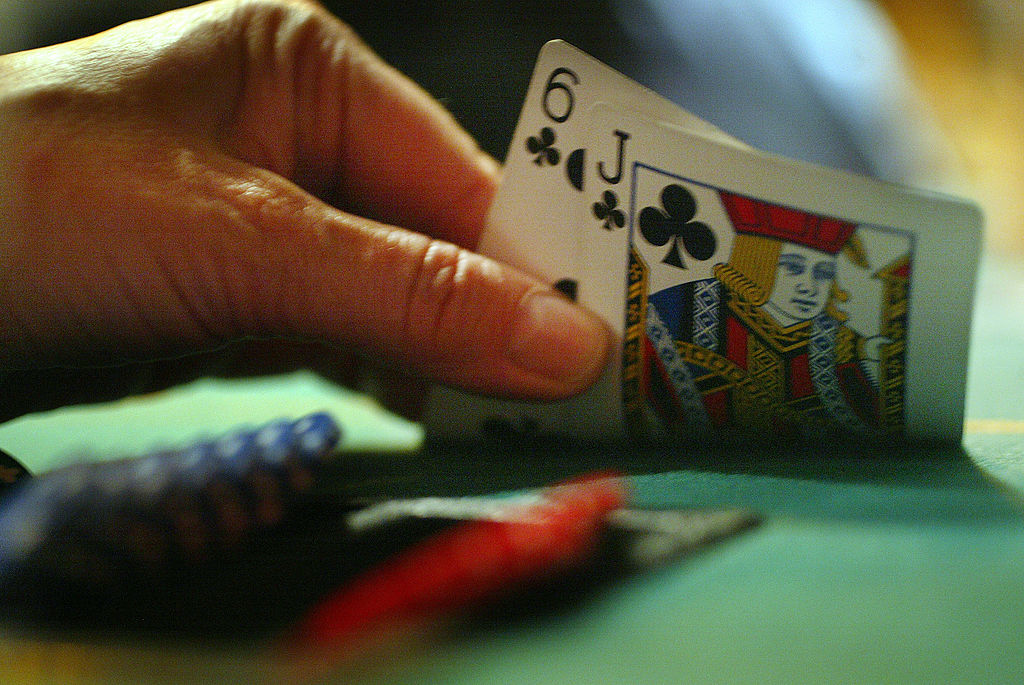
A lot of the strategy for No-Limit Texas Hold’em revolves around play before the flop because it’s such a crucial part of the game. Many of the moves a person makes at this juncture define a winning or losing session for that day. But what many people don’t realize is that the moves a person makes after the flop are just as important to their success as pre-flop play is.
That’s why a person needs to define a good strategy to use that will enable them to make good decisions in post-flop play. The better one does in post-flop situations, the better they set themselves up to do on an overall scale. Plus people can save a lot of chips by making smart moves after the flop occurs. Here are some good things to keep in mind with regards to post-flop play.
Do you currently have a made hand?
When you’ve got a made hand, you’re holding something that is close to the nuts (best possible hand in a given situation) or is the actual nuts. Obviously, with the nuts you want to try and get as much money in the pot as possible in post-flop play. However, the real skill comes in determining what to do without the nuts. For this, you’ll have to figure out how many hands can beat you and then make a decision. For instance, a board that reads Kh-3c-5d would give you top pair if you held something like Kd-10c. There’s no real straight or flush possibility yet so throw those out and that leaves two pairs and sets as the likely cards to beat your hand.
A simple way to process this information is to figure out that there are 3 possible sets and 3 possible two pair combinations so that leaves 6 hands that could beat you at this point. Common odds put the amount of hands an opponent will play at 300 (1225 possible hands held by opponents X the estimated 25% of them they actually play) so there are only 50:1 odds that you could possibly get beat here. If there are two opponents in the hand, the odds now say 25:1 that you could get beat. However, that still definitely makes it a safe bet to continue on with this hand.
Determining how good your drawing hand is
Most of the players at the table won’t be holding the nuts right after the flop hits the board so they’ll be in a situation where they will be hoping for better cards. Going further with this, players will have to decide if the situation they’re in here warrants staying in the hand by determining how strong their drawing hand looks.
This is done by figuring out how many cards improve your hand, where this improvement takes you, and the hands your opponents can still beat you with. A lot of this subject matter deals with reverse implied odds where you’re estimating how much you stand to lose even if you get your hand (or already have it). Unfortunately, there is no sure-fire way to calculate reverse implied odds but there are ways to get a good idea.
Say you’re sitting on a board of 6h-Js-5h and you’re holding 3c-4d. Now a 2 or 7 will give you the straight you want but there is also a good possibility that someone is drawing for a flush that will beat your straight so this has to be factored into the equation when determining how much you’re willing to bet to stay in the hand. Slightly favorable pot odds or implied odds can sometimes be thrown out the window after reverse implied odds come into the equation.
How long till you are forced to go all-in
In the game of No-Limit Texas Hold’em the bets can get a little crazy at times and, before one knows it, they’re all-in. The key is to avoid the whole “before you know it you’re all-in” type of mistakes in your pre-flop play. Because not thinking ahead can sometimes leave a person playing some second rate cards with everything on the line.
Let’s say that you’re in a No-Limit Hold’em tournament, the pot is currently $300, and you’ve got the smallest stack out of anybody with $1,800. If the deep stacks are laying out pot-sized bets and two people bet before you, that would up the pot to $600 and then $1,200. If it’s just after the flop and you’re looking to hang on for a better future hand, getting in this pot will probably force you to go all-in. In this case, it’s better to wait for a premium hand if you’re holding second rate cards and then risk going all-in.
Factoring in bluffs and continuation bets
If there were no strategy involved in Texas Hold’em, the game would be all about mathematics and figuring out odds. Fortunately, there is plenty of strategy involved as it would be a very boring game without things like bluffs and continuation bets (a bet made after the flop by an aggressive pre-flop better to still represent a strong hand). This also means that one has to factor this stuff into their post-flop No-Limit Texas Hold’em strategy.
The biggest thing to watch for when searching for these potential situations is a bad flop paired with a weak board. Nobody can be too certain about their hand at this point which would mean that anybody trying to bet big in this situation or who throws out a continuation bet may be doing so in hopes of stealing this small pot. While this may not always be the case, these bets normally can’t be taken at the same value as those made by opponents in other situations.