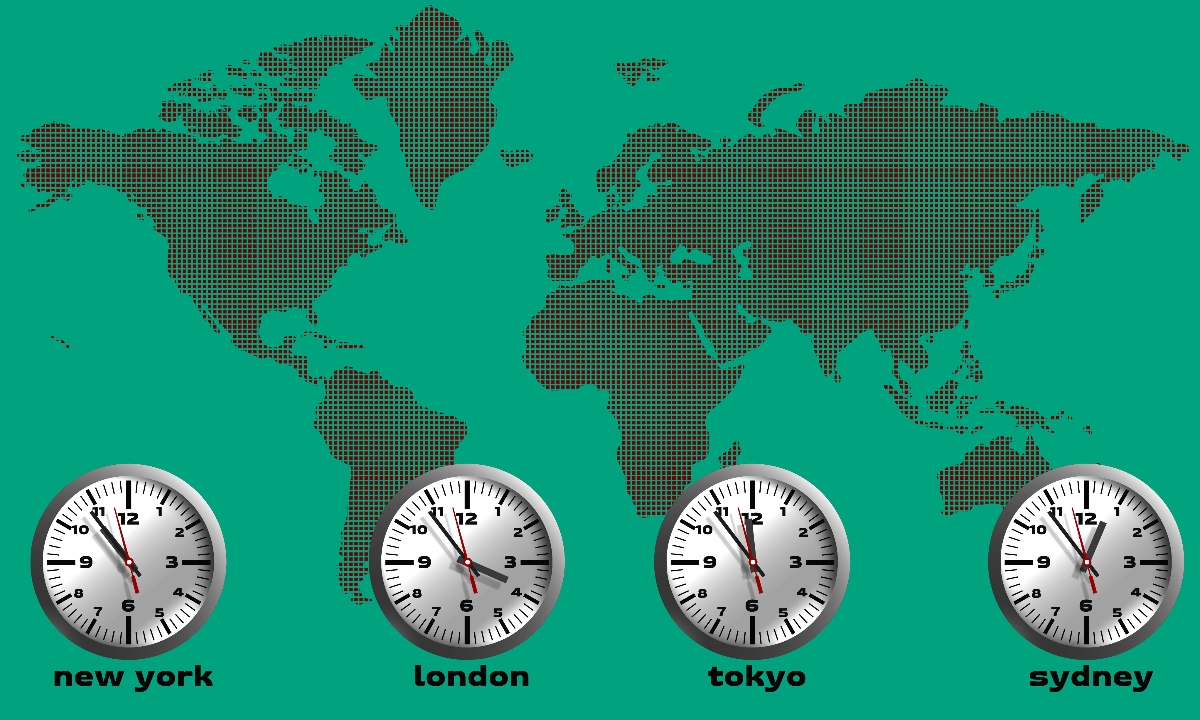
The Cities Most Disrupted by the 2026 World Cup

The Cities Where the World Cup Will Disrupt Work the Most in 2026
Which Cities Will Lose the Most Working Hours to the 2026 World Cup?
The 2026 FIFA World Cup runs from 11 June to 19 July — 49 days, 104 matches, three host nations. Vegas Insider analysed the full match schedule across more than 110 cities worldwide to calculate where the tournament will cause the greatest disruption to the working day.
For every city in the dataset, we calculated how many hours of World Cup football fall inside the standard working day — 9am to 5pm, Monday to Friday — across all 104 matches. A match kicking off at noon local time contributes two hours of disruption. A match kicking off at 9pm contributes nothing.
That working-day hours total was then weighted by each city's Football Interest Rating: a measure of how likely workers actually are to stop and watch, scored from 0 to 100. It is built from two official sources — each country's FIFA world ranking and its 2022 World Cup television audience as a share of national population. A city with many working-day hours but low football following scores lower than one where both are high.
The result is a Workplace Disruption Score from 0 to 100, where 100 is the most disrupted city in the world. Higher score means more working hours lost to the World Cup.
The city that scores 100 is not in South America. It is not a host nation. It is Honolulu, Hawaii — where 109.5 hours of World Cup football land inside the working day, more than any other city on earth. Meanwhile Paris, the city with the highest Football Interest Rating in the entire dataset (100 out of 100), records zero working-day match hours. Every one of the 104 fixtures falls after the French working day ends.
Timezone determines everything. Here is the full breakdown.
Section 1 — Global Rankings
Global Rankings: Honolulu #1, Paris Zero, Latin America Dominates the Top 10
- Honolulu, Hawaii ranks #1 in the world with 109.5 hours of World Cup football inside the standard working day — more than any city in any host nation, including every city in the United States, Canada, and Mexico.
- Anchorage, Alaska ranks #2 with 95.5 working-day hours — ahead of Bogotá, Buenos Aires, São Paulo, and every Latin American city in the dataset.
- Paris has a Football Interest Rating of 100 out of 100 — the highest in the entire global study — yet logs zero working-day match hours. London, Madrid, Rome, and Berlin are in exactly the same position.
- All of the global top 11 cities are in the Americas — Bogotá (#3), three Mexican host cities (joint #4), Buenos Aires and Córdoba (joint #7), and all three Brazilian cities (joint #9).
- Los Angeles, San Francisco, and Seattle share global rank #12 at 89.0 working-day hours each — the highest figures of any US host city and ahead of every European city in the world.
- Tokyo ranks #16 globally with 48.0 working-day hours — the highest of any Asian city, driven by Japan's strong 2022 television audience and the late-night UTC kickoffs that land in its working morning.
The Global Top 10: Ranked by Working Hours Lost to the World Cup
Honolulu logs 109.5 hours of World Cup football inside the standard working day — the highest of any city on earth, more than every South American, Latin American, or host nation city in the dataset. Hawaii sits 10 hours behind London. The afternoon and evening kickoff slots designed for US primetime television land squarely between 9am and 5pm in Honolulu. Workers there face the equivalent of nearly 14 full working days of World Cup match time during office hours across the 49-day tournament.
Honolulu is not a football city. It hosts no matches. Its Football Interest Rating is 67.5 — the US national average, significantly lower than Argentina, Brazil, or Colombia. It does not need to be passionate. It just needs to be far enough west.
Anchorage ranks second globally with 95.5 working-day hours — more than Bogotá, more than Buenos Aires, more than any city in Latin America, Europe, or Asia. Alaska sits one hour ahead of Hawaii during the tournament, catching almost the same bracket of afternoon UTC kickoffs inside its working day. Anchorage has a population of approximately 290,000 and no particular football culture. Geography alone places it second in the world.
Bogotá is the highest-ranked city in the world where football passion meaningfully drives the score. Colombia's capital sees most morning UTC kickoffs land between 9am and 2pm local time, producing 77.0 working-day hours. Its Football Interest Rating of 81.1 — built on Colombia's FIFA rank of #8 and strong 2022 television audience data — pushes it to third globally. Colombia qualified for the 2026 tournament.
All three Mexican host cities share the same timezone and the same national Football Interest Rating of 80.1, giving each a score of 83.6 and placing them joint fourth in the world. Each logs 77.0 working-day hours. Mexico's rating combines a FIFA rank of #14 with one of the highest 2022 television reach figures in the Americas. All three cities will also stage live matches, adding local disruption the score does not fully capture.
Argentina's defending champions carry the highest Football Interest Rating of any country in the global dataset — 94.2 out of 100 — built on a FIFA rank of #3 and the strongest 2022 television audience share in South America. With 57.5 working-day hours, both Argentine cities log fewer raw hours than Mexico or Colombia, but their football interest pulls them firmly into the global top 10.
Brazil's three major cities share rank #9 with identical scores. A Football Interest Rating of 94.1 — FIFA rank #5 and the largest World Cup television audience by absolute numbers in 2022 — combines with 57.5 working-day hours to place all three inside the global top 10. São Paulo is the financial centre of South America, home to a workforce of several million. The productivity cost here operates at a scale no other city in the dataset can match.
Section 2 — United States
USA Host Cities: Los Angeles Scores 567 Times Higher Than Atlanta — Both Host Quarter-Finals
Eleven US cities are official 2026 World Cup host venues. Vegas Insider ranked all 11 using the same two factors applied globally: how many hours of tournament football fall inside their working day, and how strong the local football following is. For all cities in the study, the Football Interest Rating uses the same two national signals: each country's FIFA world ranking and its 2022 World Cup television audience as a share of national population, weighted equally.
The result is a ranking dominated by one finding: timezone divides these 11 cities more decisively than any other factor. The three Pacific time host cities — Los Angeles, San Francisco, and Seattle — each log 89.0 working-day hours. The five Eastern time host cities — Miami, New York, Boston, Philadelphia, and Atlanta — each log 57.5. That 31.5-hour gap, sustained across 49 days, is the single biggest structural difference between host cities in this study.
- Los Angeles ranks #1 among the 11 US host cities with a Disruption Score of 55.2 — 89.0 Pacific timezone working-day hours make it the most disrupted official US venue in the tournament.
- Atlanta ranks last among all 11 host cities with a Disruption Score of 0.10 — its Eastern timezone delivers just 57.5 working-day hours — the lowest of any timezone group.
- Los Angeles scores 567 times higher than Atlanta on the Disruption Scale. Both cities are official World Cup hosts. Both will stage quarter-finals.
- New York City ranks 8th of the 11 host venues with a Disruption Score of 0.53 — despite hosting the Final on 19 July, its Eastern timezone delivers just 57.5 working-day hours — 31.5 fewer than Pacific host cities.
- Seattle logs 89.0 working-day hours — the same as Los Angeles — but a lower national football interest rating places it 6th among the 11 venues at Disruption Score 8.36.
- Miami is the Eastern timezone anomaly — its Eastern timezone delivers just 57.5 working-day hours, placing it 7th among the 11 venues at Disruption Score 1.39.
All 11 US Host Venues Ranked: From Los Angeles to Atlanta
Los Angeles is the most disrupted official World Cup host city in the United States. Its Pacific timezone delivers 89.0 working-day match hours across the tournament — 31.5 more hours than the five Eastern time host venues. The Pacific timezone gives it the maximum working-day match hours of any US host city. Los Angeles scores 567 times higher than Atlanta on the Disruption Scale, despite both being official host venues staging quarter-finals.
San Francisco logs the same 89.0 Pacific timezone working-day hours as Los Angeles and ranks second among the host venues. The Bay Area workforce will experience 89.0 hours of World Cup match time during office hours — the same raw exposure as Los Angeles.
Houston leads the Central time host cities. Its 67.5 working-day hours reflect its Central timezone position. Houston, Dallas, and Kansas City all score identically under the national methodology — timezone is the only variable separating them from the Pacific host cities.
Dallas ranks fourth among host venues with 67.5 Central timezone working-day hours — the same as Houston and Kansas City. Dallas is one of the fastest-growing cities in the United States and one of the three Central time host venues.
Kansas City rounds out the Central time host venues with 67.5 working-day hours. All three Central time cities score identically. Kansas City is the smallest of the three markets but stages prominent group stage fixtures.
Seattle logs the same 89.0 Pacific timezone working-day hours as Los Angeles and San Francisco — and ranks sixth among the 11 host venues. All three Pacific cities — Los Angeles, San Francisco, and Seattle — log identical scores under the national methodology. Timezone gives them each 89.0 working-day hours.
Miami sits among the Eastern time host cities at 57.5 working-day hours — 31.5 fewer than Los Angeles. All five Eastern venues score identically under the national methodology. The timezone is the binding constraint regardless of local football culture.
New York City hosts the World Cup Final on 19 July and ranks 8th among the 11 US host venues. Eastern timezone overlap of 57.5 working-day hours produces a Disruption Score of just 0.53. On the same day the Final takes place at MetLife Stadium, workers in Los Angeles will have already experienced 89 hours of World Cup football during office hours. New York will have experienced 57.5.
Boston ranks ninth among host venues with 57.5 Eastern timezone working-day hours. Boston is a major financial and educational centre whose workforce will experience the tournament almost entirely outside office hours.
Philadelphia ranks tenth with 57.5 Eastern timezone working-day hours. Like every Eastern host venue, it sits significantly behind the Pacific and Central cities on the disruption scale.
Atlanta ranks last among all 11 US host venues — and last among all 61 US cities in the full study. Eastern timezone overlap of 57.5 working-day hours produces a Disruption Score of just 0.10. Atlanta will stage two quarter-finals. Its Disruption Score is 567 times lower than Los Angeles, which will also stage quarter-finals in the same tournament.
Section 3 — Europe
Europe: The World's Most Passionate Football Continent Loses Zero Working Hours
Europe's football cities hold the highest Football Interest Ratings in the dataset. Paris scores 100 out of 100. Madrid and Barcelona score 94.2. London scores 91.5. Rome and Milan score 90.3. Every single one of these cities logs zero working-day match hours. Not one minute of World Cup football falls inside a European office during normal business hours across the entire 49-day tournament.
- Paris has a Football Interest Rating of 100 out of 100 — the highest in the entire global study — and logs zero working-day match hours. Its Disruption Score is 1.47 out of 100.
- London, Madrid, Barcelona, Rome, Milan, and Berlin all score zero working-day hours. Not one of the 104 World Cup fixtures falls inside their working day.
- Lisbon is the best-ranked European city with just 4.0 working-day match hours — a handful of the earliest UTC kickoffs catch the tail end of the Portuguese working day. Its Disruption Score is 4.99.
- Dublin is the only other European city with any working-day match time at all — 2.0 hours across the entire tournament. Disruption Score: 1.93.
- The contrast between Paris and Bogotá captures the tournament's structural imbalance: Paris Football Interest Rating 100, Bogotá 81.1 — yet Bogotá's Disruption Score (84.7) is 58 times higher than Paris's (1.47).
- The reason is the kickoff schedule: a match at 19:00 UTC — the most common tournament slot — is 8pm in Paris, 8pm in Madrid, 9pm in Berlin. The schedule was built around North American primetime television, and every European city is on the wrong side of it.
The schedule mechanics are worth spelling out. The earliest common tournament kickoff slot is 16:00 UTC on selected group stage days — that is 5pm in Paris, right as offices close. The most common evening slot, 19:00 UTC, is 8pm across Western Europe. The late slots at 22:00 UTC are 11pm in London and midnight in Berlin. Not one of those times disrupts a European working day.
Lisbon (UTC+1 in winter, but Portugal runs UTC+1 in summer too) and Dublin both catch 1pm-2pm arrivals from a small number of those 16:00 UTC fixtures that clip their working day by an hour or two. Every other European city catches nothing. The contrast is stark: Bogotá logs 77.0 working-day match hours. Lisbon, the best-placed European city, logs 4.0.
Australia: The Matches That Air at Midnight in London Start at 10am in Sydney
Australia sits in the opposite timezone position to Europe. Late-night UTC kickoffs that fall after midnight in London land in Australian morning office hours. Sydney, Melbourne, and Brisbane are 10 hours ahead of London during the tournament — so a match at midnight UK time is 10am in Sydney. The result is 60 working-day hours of World Cup disruption for each of Australia's three east coast cities, placing them firmly inside the global top 30 and well ahead of any European city.
- Sydney, Melbourne, and Brisbane each log 60.0 working-day hours and a Disruption Score of 50.8 — ranking joint #24 in the world, ahead of every European city and ahead of Buenos Aires.
- Perth logs 38.0 working-day hours and a Disruption Score of 32.5 — fewer than the east coast cities because Western Australia is only 8 hours ahead of London, catching a narrower range of fixtures during office hours.
- New Zealand ranks even higher than Australia — Auckland and Wellington each log 91.0 working-day hours and a Disruption Score of 41.3, ranking joint #35 globally. New Zealand is 12 hours ahead of London, pushing the highest number of fixtures into working hours of any Oceania country.
- Australia's Football Interest Rating is 62.0 out of 100 — built on a FIFA ranking of #74 and a 2022 television audience that reached 50 out of 100 on the normalised scale. The Socceroos qualified for 2026.
- The 36 fixtures kicking off between 00:00 and 02:00 UTC — which air between midnight and 2am in London — land at 10am, 11am, and noon in Sydney. Those are the most disruptive matches for Australian workers.
The same match schedule that causes zero working-day disruption in London causes 60 hours of it in Sydney. That is not because Australians care more about football than the British — their Football Interest Rating of 62.0 is actually lower than England's 91.5. It is because the clock puts those matches in their morning instead of their evening.
For Australian employers, the practical figure is this: across the 49-day tournament, workers in Sydney, Melbourne, and Brisbane face the equivalent of 7.5 full working days of World Cup football during office hours. In Perth that figure is 4.75 days. In Auckland it is more than 11 days — the highest of any city outside the Americas.
Section 5 — Canada
Canada: Vancouver Beats Host City Toronto by Nearly Four Full Working Days
Canada's 10-city ranking uses a single national Football Interest Rating — 60.5 out of 100 — applied equally to all cities. Because every Canadian city scores identically on football interest, the ranking is decided entirely by one factor: how many working-day match hours each timezone catches. West beats east, consistently and decisively.
- Vancouver ranks #1 in Canada with 89.0 working-day hours and a Disruption Score of 100 — both a host city and the most disrupted Canadian market in the tournament.
- Calgary and Edmonton rank joint #2 with 77.0 working-day hours and a Disruption Score of 78.0 — both ahead of host city Toronto despite hosting no matches.
- Vancouver logs 31.5 more working-day hours than Toronto — equivalent to nearly four full working days of additional World Cup disruption, from timezone alone.
- Toronto, Montreal, Ottawa, Quebec City, and Hamilton all share rank #5 at Disruption Score 42.2 each — the Eastern timezone gives all five the same 57.5 working-day hours.
- Halifax ranks last with 35.0 working-day hours — the Atlantic timezone catches fewer tournament fixtures during business hours than any other Canadian city in the study.
The timezone gap across Canada is direct and measurable. A match kicking off at 19:00 UTC — the most common tournament slot — arrives at noon in Vancouver, 1pm in Calgary, 2pm in Winnipeg, and 3pm in Toronto. Over 104 matches, those one-hour differences accumulate to a gap of 31.5 working-day hours between Vancouver and Toronto — nearly four full working days of additional disruption, purely from geography.
Calgary and Edmonton each stage no matches but log 19.5 more working-day hours than Toronto, which hosts matches at BMO Field. Employers running operations across multiple Canadian timezones will see measurably different levels of tournament disruption in the same organisation on the same working days.
Expert Comment
"The single most important finding in this study is that Honolulu — a city with no World Cup fixtures and a national-average football following — ranks first in the world ahead of Bogotá, Buenos Aires, and São Paulo. That is entirely because the tournament schedule was designed around North American primetime television. The kickoff slots that work for a US prime-time audience happen to fall inside the working day in Hawaii and Alaska more completely than anywhere else on earth."
"The Paris number is the one every business editor should write down. France has a Football Interest Rating of 100 out of 100 — the highest in the global study — and zero hours of World Cup football during the working day. The tournament does not disrupt a single French, British, German, or Italian employer during office hours. Europe's most football-passionate cities will watch every match after work. The schedule was not designed to protect European productivity — but the kickoff times do exactly that, accidentally and completely."
"Australia sits in an interesting position that does not get enough attention. Sydney logs 60 working-day hours — more than Buenos Aires, more than any US Eastern time city — because the late-night UTC kickoffs that UK viewers watch at midnight are the ones Australian workers are watching at 10am. That is a real and measurable workforce management question for employers in Sydney and Melbourne."
"In the United States, the raw working-day hours figure is the number employers should focus on. Los Angeles: 89 hours, roughly 11 working days of World Cup football during office hours. Atlanta: 57.5 hours, and a football interest so low that the effective disruption is negligible. Both cities are official host venues. Both will stage quarter-finals. The gap between them is the clearest evidence that the schedule does not distribute disruption equally — or predictably."
— Vegas Insider Data Analyst
The Score Before the Whistle Blows
The data produces one consistent finding across every region in this study: where you sit on the map determines how much the World Cup disrupts your working day. Honolulu logs 109.5 working-day hours and scores 100. Paris logs zero and scores 1.47. Both cities watch the same 104 matches. The only difference is the clock.
For employers in California, the Mountain West, and across both Canadian host cities, the productive working day will look different for 49 days this summer. The most disrupted markets are not necessarily the ones with stadiums — Salinas ranks above Los Angeles, Calgary ranks above Toronto, and Honolulu ranks above everyone. The tournament schedule rewards geography over status, every time.
For British and European employers, the picture is unexpectedly clean. No working hours will be lost to World Cup football in London, Paris, Madrid, or Berlin. The schedule was not designed to protect European productivity — but the kickoff slots do exactly that, by accident.
In 2026, the most disruptive timezone you can work in is not a city with a stadium. It is one that happens to share an afternoon with New York.
Scope. The 2026 FIFA World Cup Workplace Disruption Study covers 110 cities globally, with separate deep-dive rankings for the USA (61 cities) and Canada (10 cities). European, UK, and Australian city results are drawn from the global ranking. Cities were classified into tiers — Tier 1 host venues, Tier 2 major business hubs, Tier 3 secondary markets.
Working-day match hours. For each city, we calculated how many hours of each of the 104 fixtures fall inside the standard working day — Monday to Friday, 9am to 5pm local time. Each match window was defined as kickoff time plus two hours. Country-specific exceptions were applied — including Sunday to Thursday working weeks across parts of the Middle East and North Africa, and Mexico's standard of 9am to 6pm. Weekend matches produced zero overlap.
Football Interest Rating. Scored from 0 to 100. For global, UK, and Australian cities it combines each country's FIFA world ranking (rank #1 scores 100, rank #100 scores 1, outside top 100 scores 0) with its 2022 FIFA World Cup television audience as a percentage of national population (normalised 1–100), weighted equally. The same two-signal national methodology — FIFA ranking and 2022 television audience — applies to all cities including US host venues.
Disruption Score. Both working-day match hours and Football Interest Rating were normalised to a 0–100 scale within each ranking set. The Disruption Score is the product of those two normalised values, expressed as a percentage of the maximum score in the set. The top-ranked city scores exactly 100. Four separate rankings were produced — Global, USA, Canada, and a European subset — and were not combined. Data extracted May 2026.
- FIFA 2026 match schedule: fifa.com — World Cup 2026 Scores and Fixtures
- FIFA World Rankings: fifa.com — Men's World Rankings
- 2022 World Cup television audience: FIFA and Nielsen — 2022 FIFA World Cup Television Audience Report
- Canada city data: Statistics Canada — 2021 Census
- Time zone reference: timeanddate.com — World Clock and Converter
- Tournament reference: Wikipedia — 2026 FIFA World Cup
Featured News
-
FEATURED MAY 27, 2026PSG vs Arsenal Prediction, Picks, Odds
-
FEATURED MAY 27, 2026NBA Playoff Conference Final Odds: Lines, Spreads, Betting Trends
-
FEATURED MAY 27, 20262026 Circa Survivor Pool: Massive Guarantee of $20 Million to Winner
-
FEATURED MAY 24, 20262026-27 Premier League Odds: Arsenal Claims 2026 Title, Favored to Repeat
-
FEATURED MAY 24, 20262025-26 UEFA Champions League Odds: EPL Champ Arsenal Looks to Make It a Double
-
FEATURED MAY 17, 20262026 Belmont Stakes Odds, Post Positions, Predictions: Golden Tempo Returns